
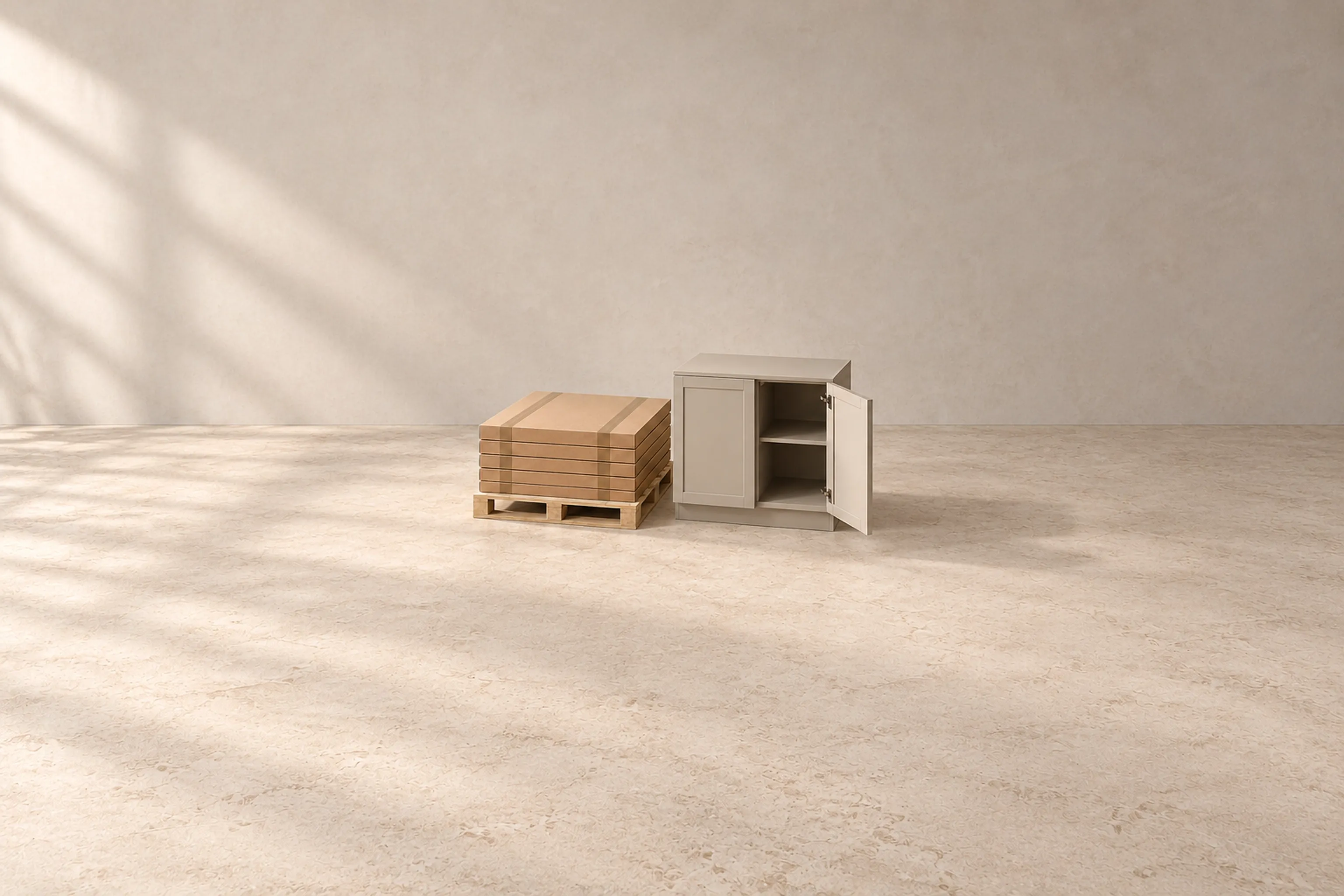
Ship flat-pack when freight cost matters and you have site labour: a container holds more cabinets. Ship assembled when install time is tight or labour is expensive, and the order still fits the containers you planned.
Flat-pack vs assembled: side by side
| Dimension | Lower freight Flat-pack | Assembled |
|---|---|---|
| Freight per unit | Lower | Higher |
| Skill needed | Basic, with assembly sheet | Installer only |
| Damage risk | Low, dense packs | Higher, needs more protection |
| Checked before shipping | Trial-assembled sample units | Every unit assembled |
| Stair and lift access | Easy | Check tall units |
| Best for | Volume projects, remote sites | Fast-track fit-outs |
 Design rendering
 Design rendering
Where flat-pack and assembled differ
Quality control
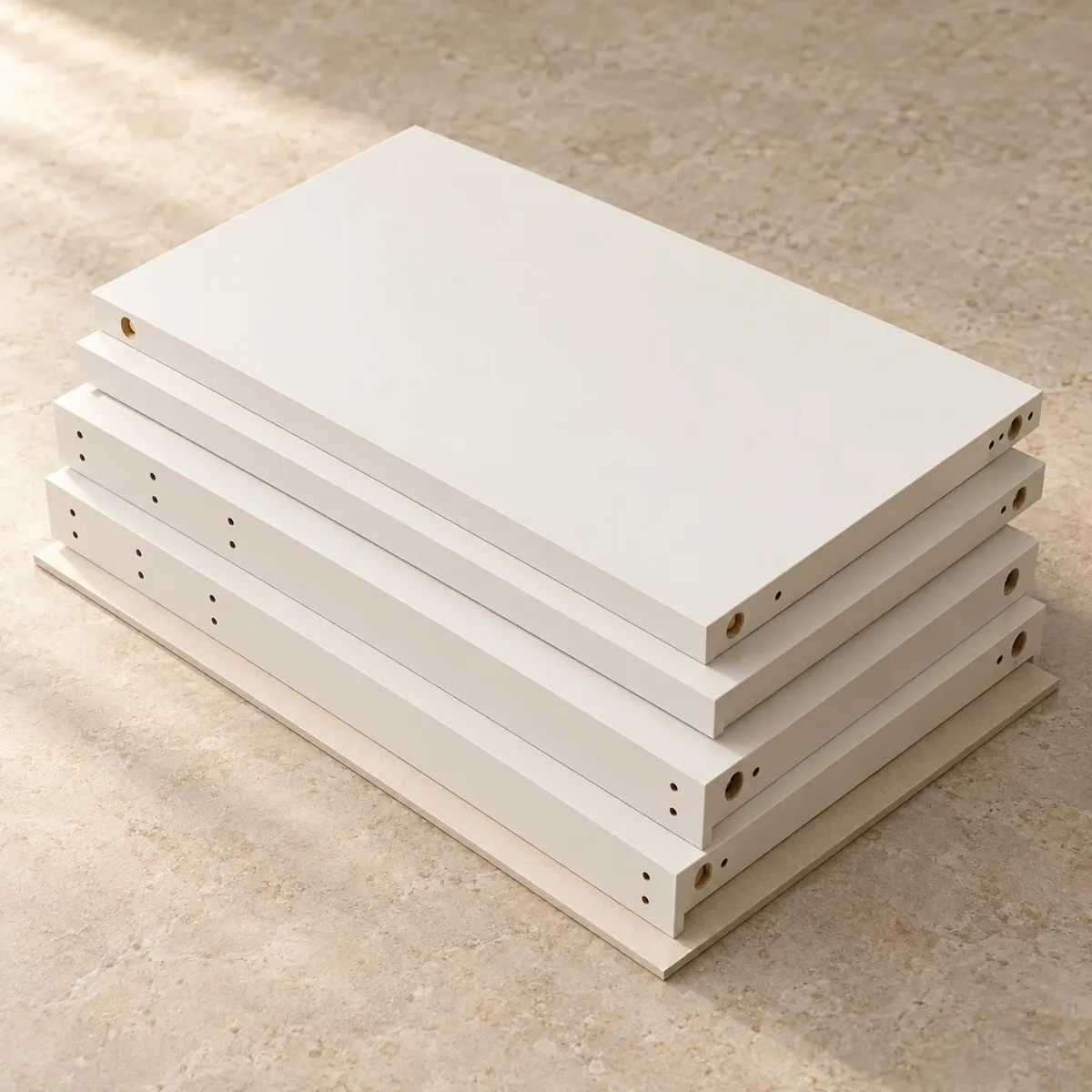
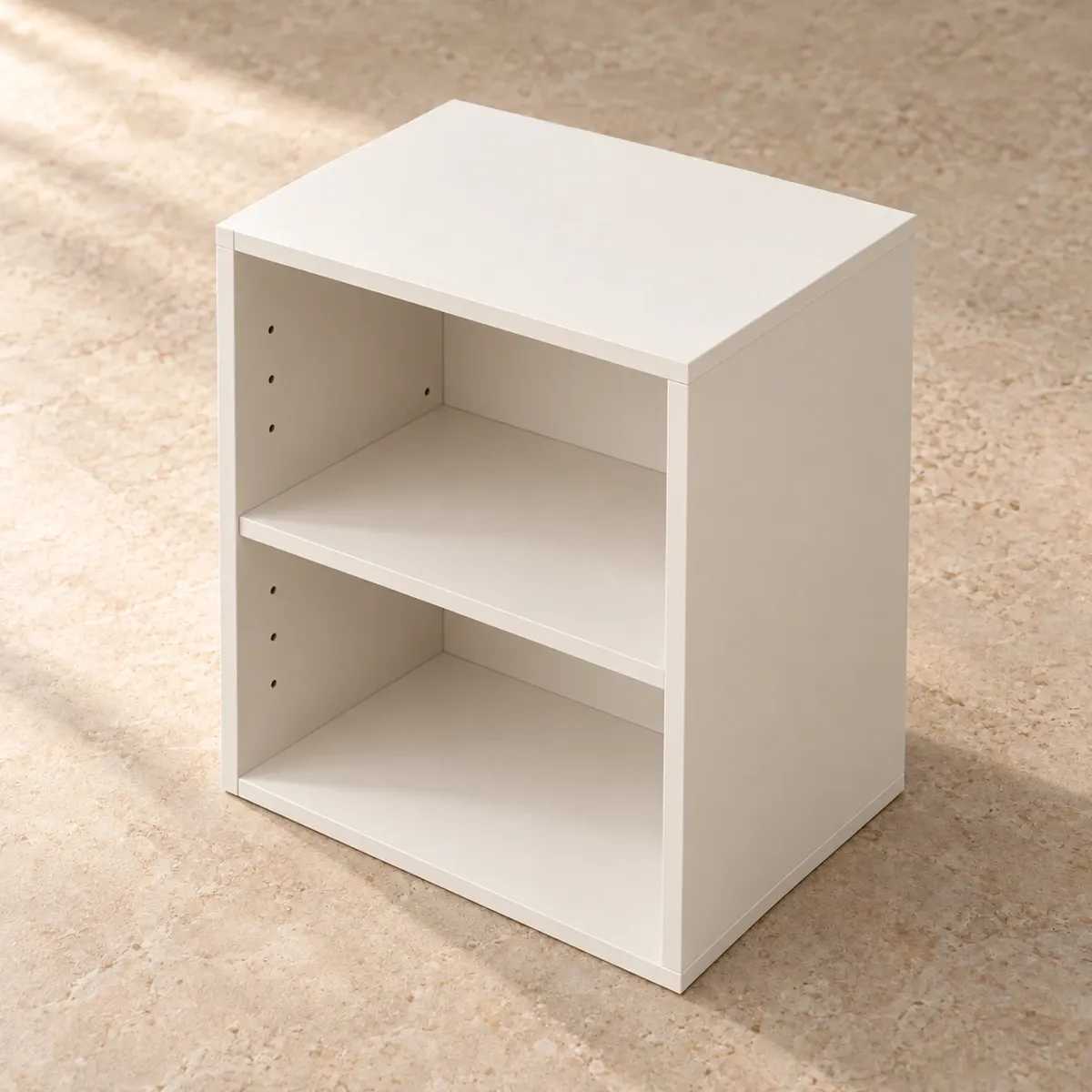
Assembled units are checked square and complete before they ship. For flat-pack, sample units of each type are trial-assembled and the rest are checked as panels and hardware kits.
Access and handling
Flat packs go up stairs and into lifts easily. Tall assembled units need a clear route; send the tightest dimension on the way in.
Flat-pack or assembled in a multi-room order
The choice is made per category, not per order. A typical consolidated container carries flat-pack wardrobes and tall units alongside assembled vanities and drawer boxes, and the load plan is built to fill it. Ask for the container count both ways before deciding.
Flat-pack or assembled: how to choose
Flat-Pack vs Assembled: FAQ
Are flat-pack cabinets lower quality?
No. The panels, hardware and tolerances are identical. Only the point of assembly changes.
Can one order mix both?
Yes. A common split is flat-pack carcasses with assembled drawer boxes and finished doors packed separately.
What comes in a flat pack?
Machined panels, a labelled hardware bag per unit, and an assembly sheet keyed to the unit code on your drawings.
Do doors ship fitted?
Doors always ship finished and wrapped, hinges pre-drilled. They are hung on site in both methods for protection.