
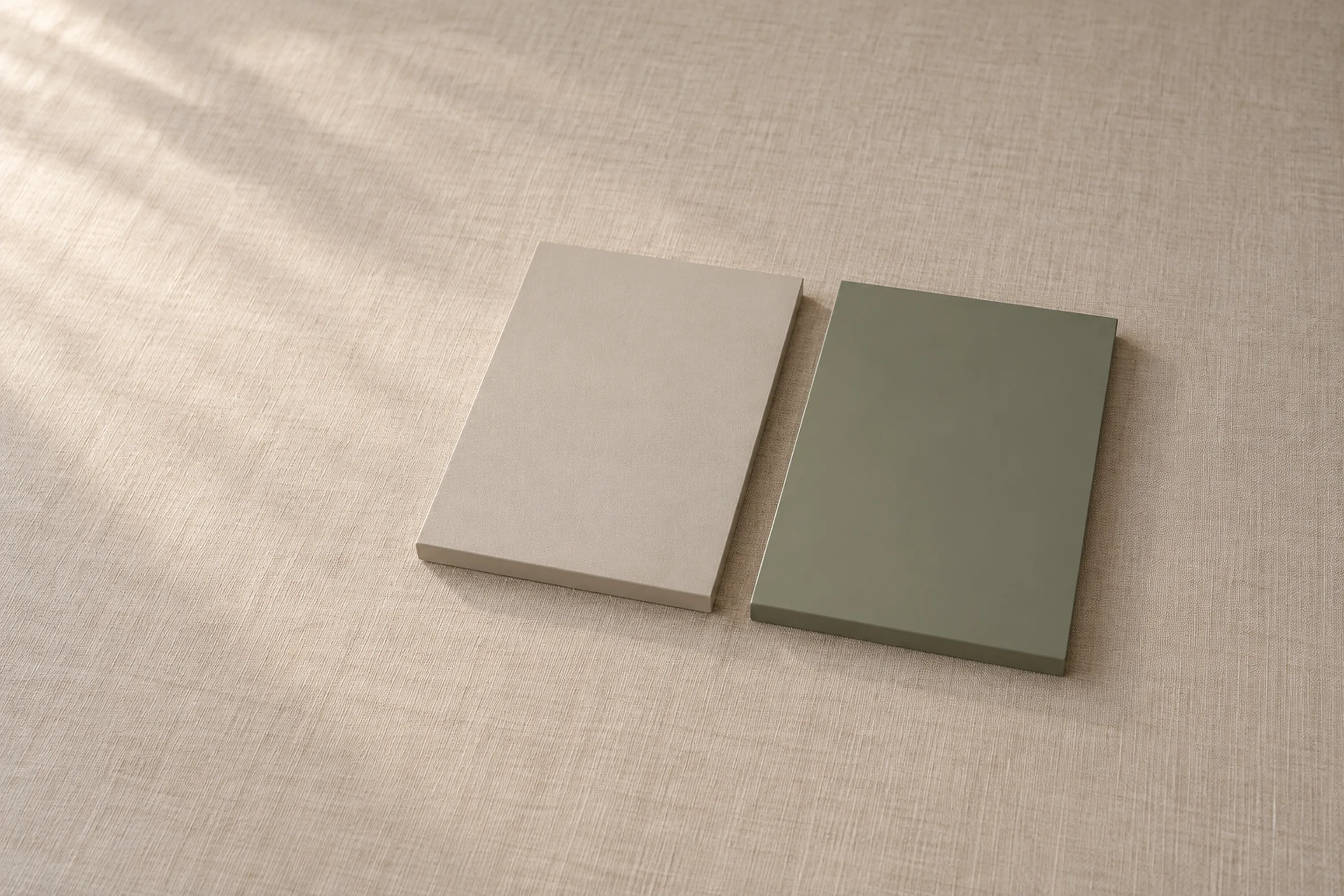
Choose PET for rentals, developments and tight budgets: it costs less and resists daily wear. Choose lacquer when you need a custom colour, a seamless edge or a high-gloss look, and can accept higher cost and a longer lead time.
PET vs lacquer: side by side
| Dimension | Recommended for most projects PET | Lacquer |
|---|---|---|
| Sheen | Matte, high gloss | Matte to high gloss |
| Edges | Matching edge band | Seamless, sprayed |
| Scratch resistance | High | Medium |
| Repairability | Replace panel | Touch-up or respray |
| Moisture | Good with sealed edges | Good, all faces sprayed |
| Best for | Rentals, developments | Design-led homes |
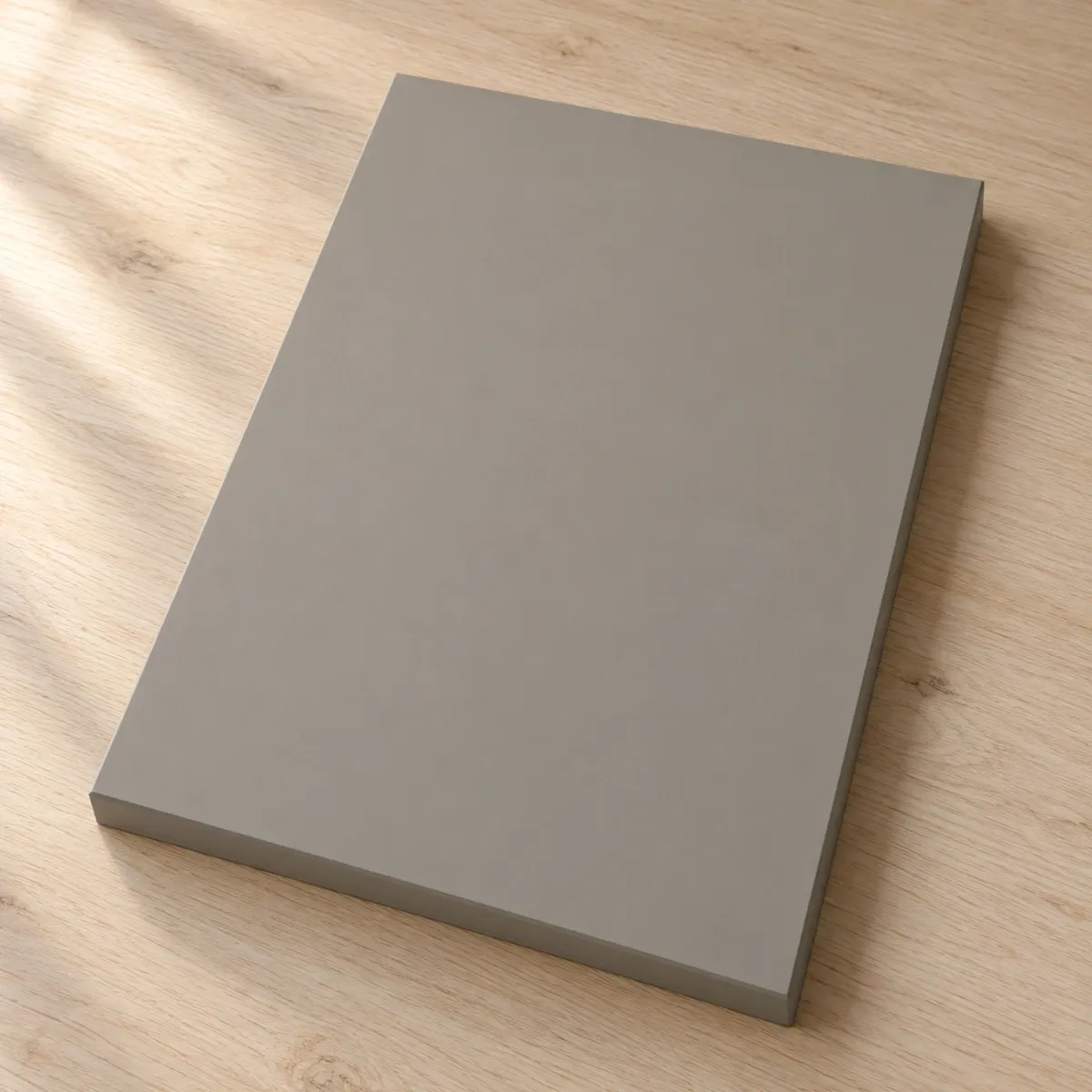 Design rendering
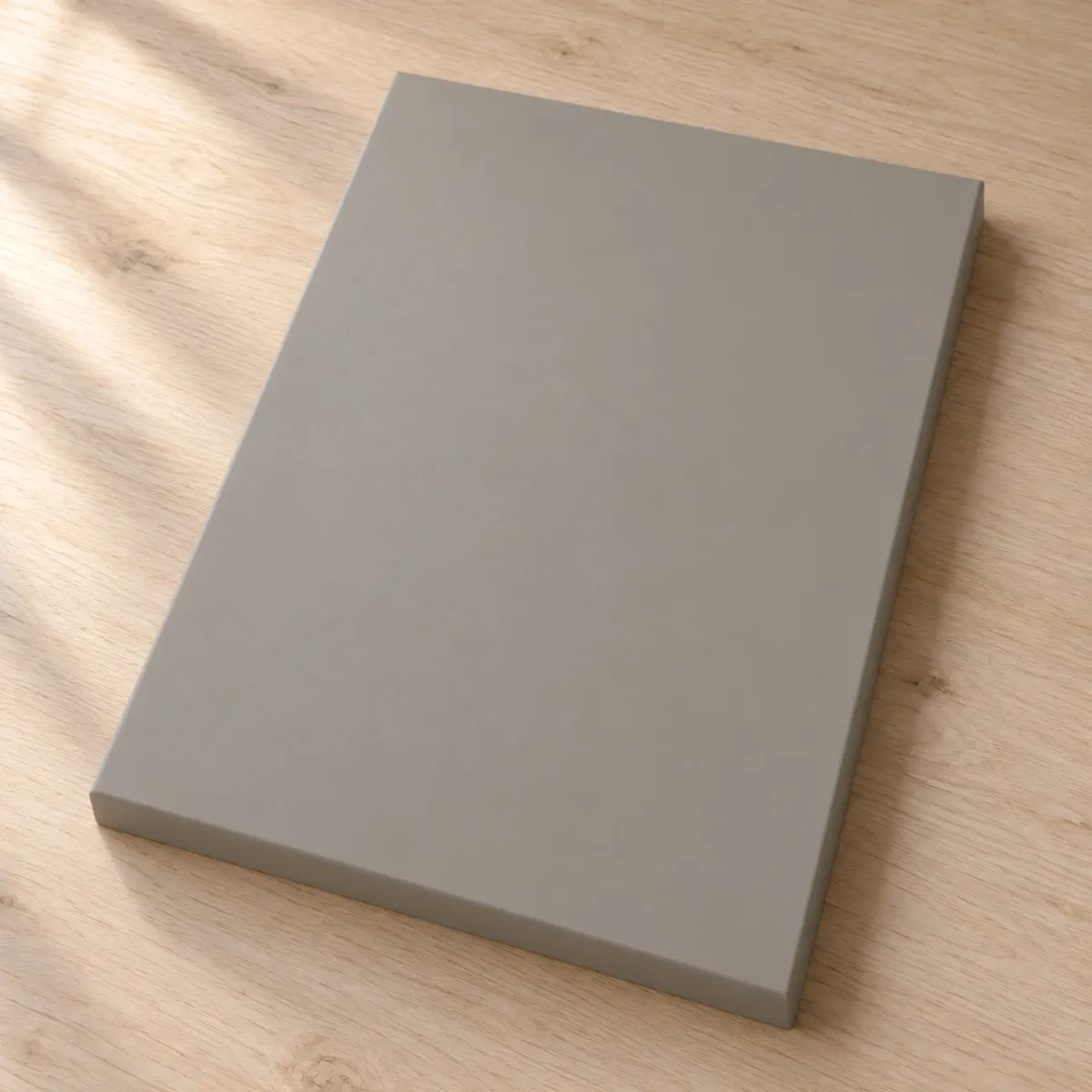 Design rendering
Where PET and lacquer differ
Durability
PET handles daily knocks and cleaning well. Lacquer can chip on edges under impact, but can be repaired rather than replaced.
PET or lacquer in a multi-room order
In a mixed order the door finish also sets the schedule. Lacquer is usually the longest-lead item in the container, so choosing it for the kitchen moves the ship date for the wardrobes and vanities too. Using PET for most units and lacquer for one feature run keeps the colour where it is seen without the whole order waiting for the spray booth.
PET or lacquer: how to choose
PET vs Lacquer Cabinet Doors: FAQ
Can I mix PET and lacquer in one kitchen?
Yes. A common pattern is PET for base and tall units and lacquer for an island or feature wall. Both ship in the same container.
Does high-gloss PET look like lacquer?
From a distance, close. Up close, lacquer has more depth and no edge band line.