
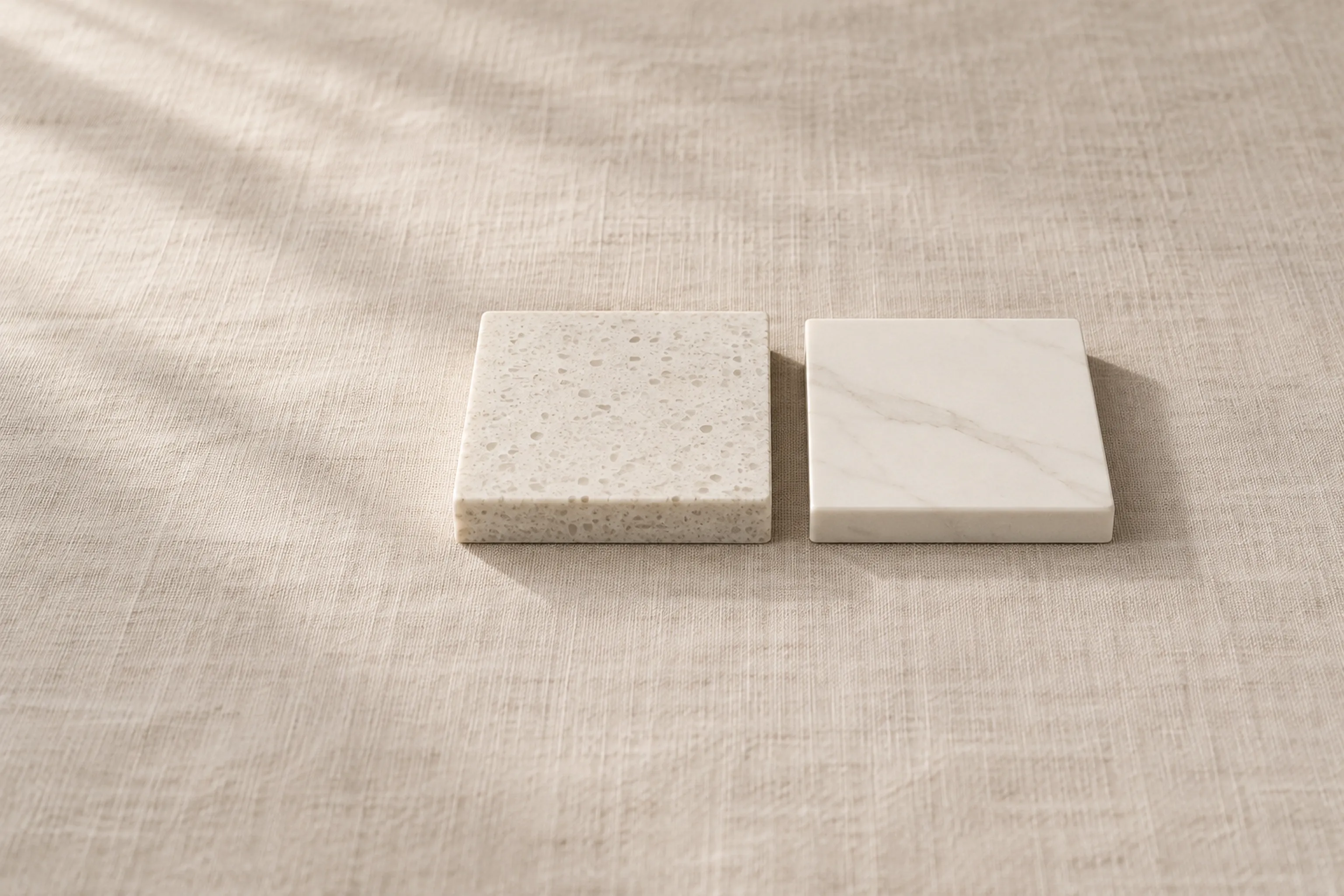
Choose quartz for a thick, solid-looking top that is forgiving to cut and repair. Choose sintered stone where heat, sunlight or scratching are concerns, or a thin modern edge is wanted. Sintered stone usually costs more to fabricate. Check local rules first: some markets restrict engineered quartz.
Quartz vs sintered stone: side by side
| Dimension | Quartz | Most heat and UV resistant Sintered stone |
|---|---|---|
| Made from | Quartz aggregate and resin | Minerals fused by heat and pressure, no resin |
| Heat resistance | Use trivets, resin can scorch | Very high |
| UV stability | Indoor only | Indoor and outdoor |
| Scratch resistance | High | Very high |
| Edge chipping | Low | Higher on thin, sharp edges |
| Pattern | Through-body | Usually surface-printed |
| On-site cutting | Standard stone tools | Specialist blades, experienced fabricator |
| Best for | Family kitchens, thick edges | Sunny rooms, outdoor, thin profiles |
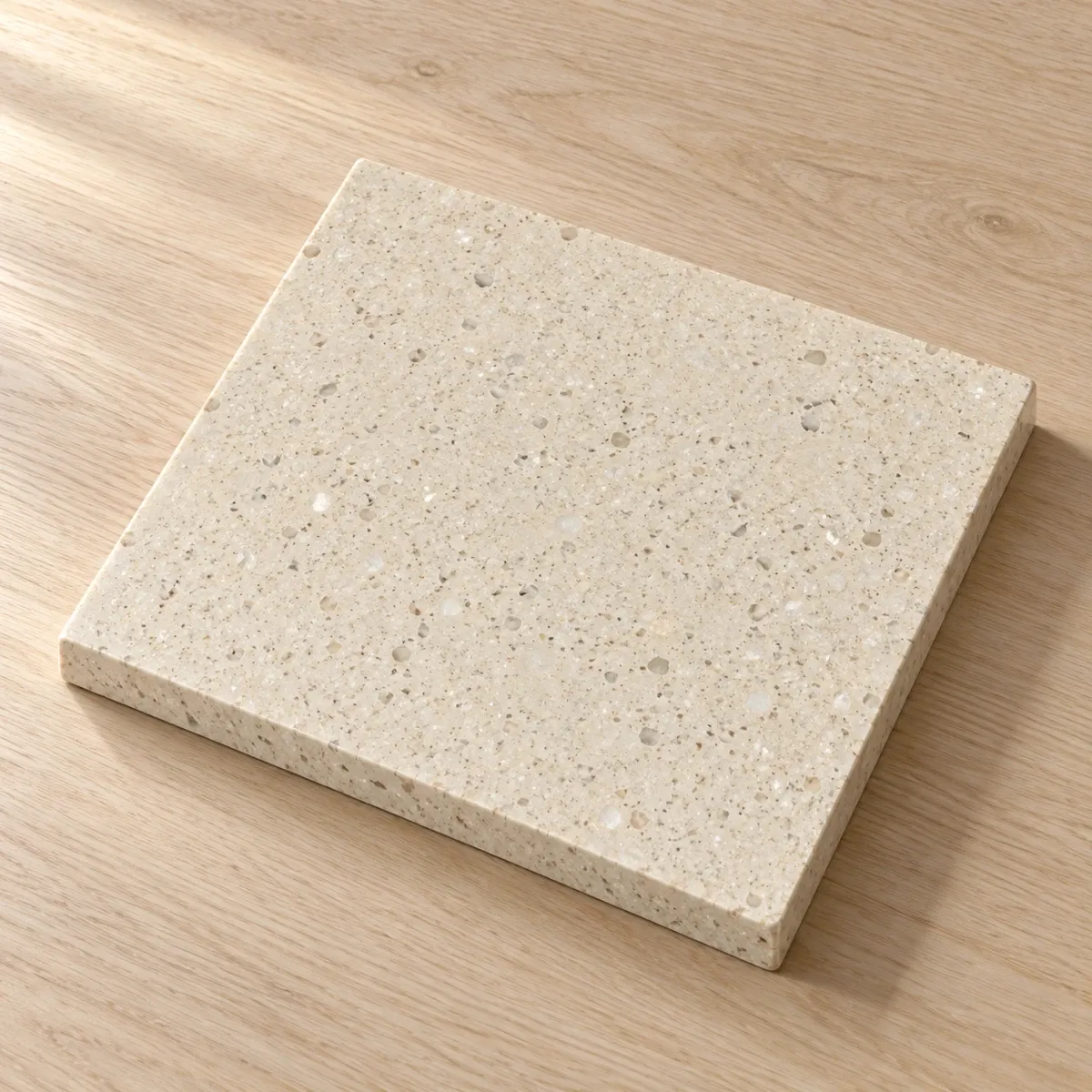 Design rendering
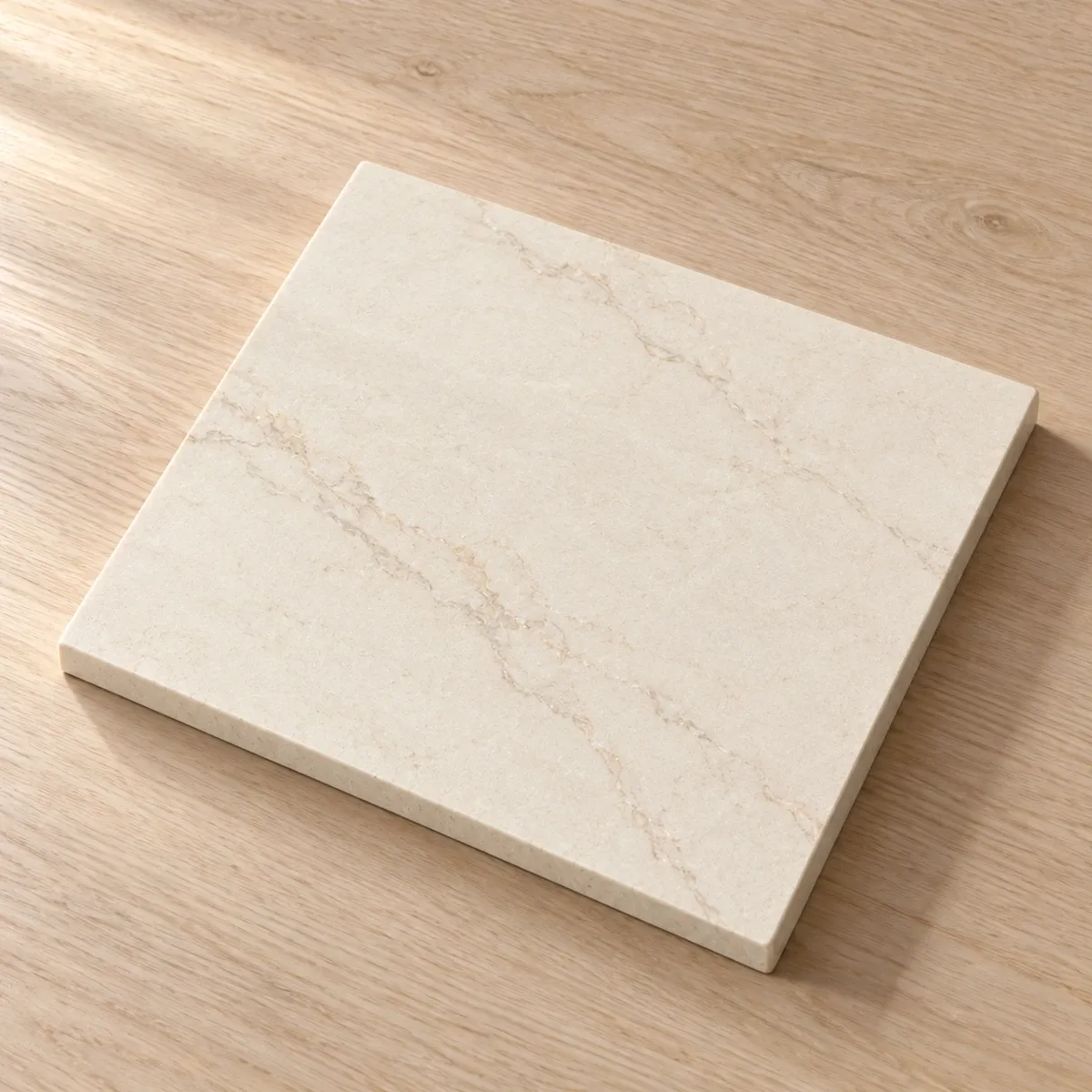 Design rendering
Where quartz and sintered stone differ
Heat and sun
Sintered stone contains no resin, so hot pans and direct sunlight do not mark it. Quartz is bound with resin, which can discolour under high heat or prolonged UV.
Fabrication
Quartz cuts and polishes like natural stone and chips can be filled. Sintered stone is harder and more brittle during cutting; sink and hob cut-outs need the right tooling and support.
Thickness and weight
Sintered stone is commonly used thin, sometimes mitred to look thick. That reduces weight for shipping and for wall-hung vanities. Quartz is used thicker and heavier.
Regulation
Australia has prohibited the manufacture, supply and installation of engineered stone benchtops since 1 July 2024 because of silica dust risks to fabricators. Other markets are reviewing similar rules. Confirm what is permitted before specifying quartz.
Quartz or sintered stone in a multi-room order
Stone changes the load plan. Tops are heavy, so they go on the container floor in crates with cabinets above, and a large stone order can reach the weight limit before the container is full. That is one reason many buyers ship vanity tops with the cabinets but template kitchen tops locally.
Quartz or sintered stone: how to choose
Quartz vs Sintered Stone Tops: FAQ
Should I import countertops or buy them locally?
Stone is heavy and site dimensions change. Many buyers import cabinets and template tops locally. Vanity tops are small and standardised, so they ship well.
Can sintered stone chip?
Yes, at thin unsupported edges if struck. A slightly eased edge profile reduces the risk.
Is sintered stone the same as porcelain?
They are closely related. Both are sintered mineral slabs; names vary by brand and region.
Are tops cut to my sink and hob?
Yes, from the appliance model numbers. Cut-outs are made before shipping, or left uncut if you prefer to cut on site.