
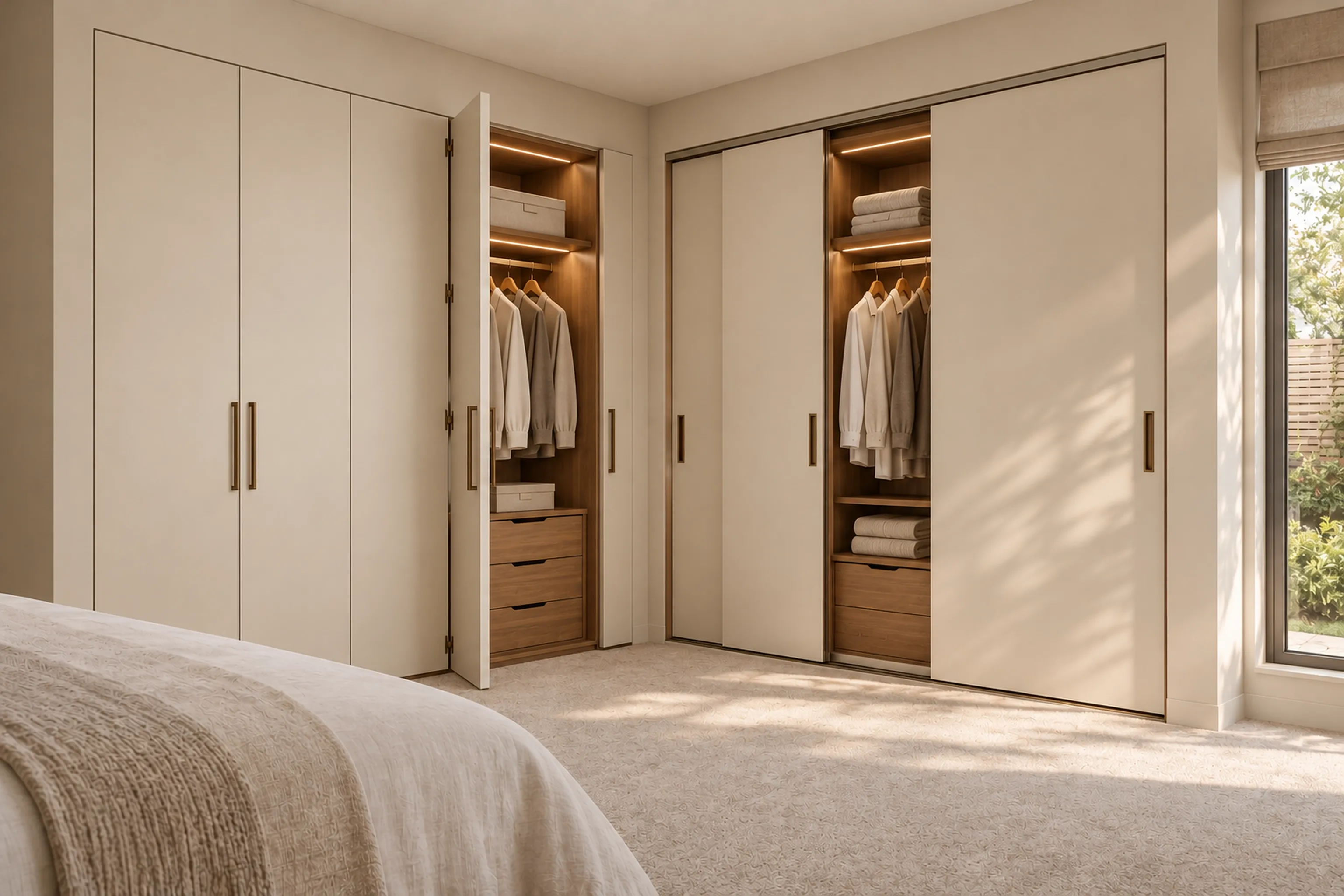
Choose hinged wardrobes when there is room for doors to swing: they cost less and open the whole interior. Choose sliding when a bed or wall is close, or the wardrobe spans a wide wall and you want large mirror or glass panels.
Hinged vs sliding: side by side
| Dimension | Lower cost, full access Hinged | Sliding |
|---|---|---|
| Clearance in front | One door width | None |
| Access | Whole interior at once | One section at a time |
| Internal drawers | Anywhere | Behind a single panel only |
| Door finishes | Any board finish, Shaker | Board, mirror, glass |
| Floor levelling | Tolerant | Track must be level |
| Best for | Most bedrooms | Narrow rooms, wide walls |
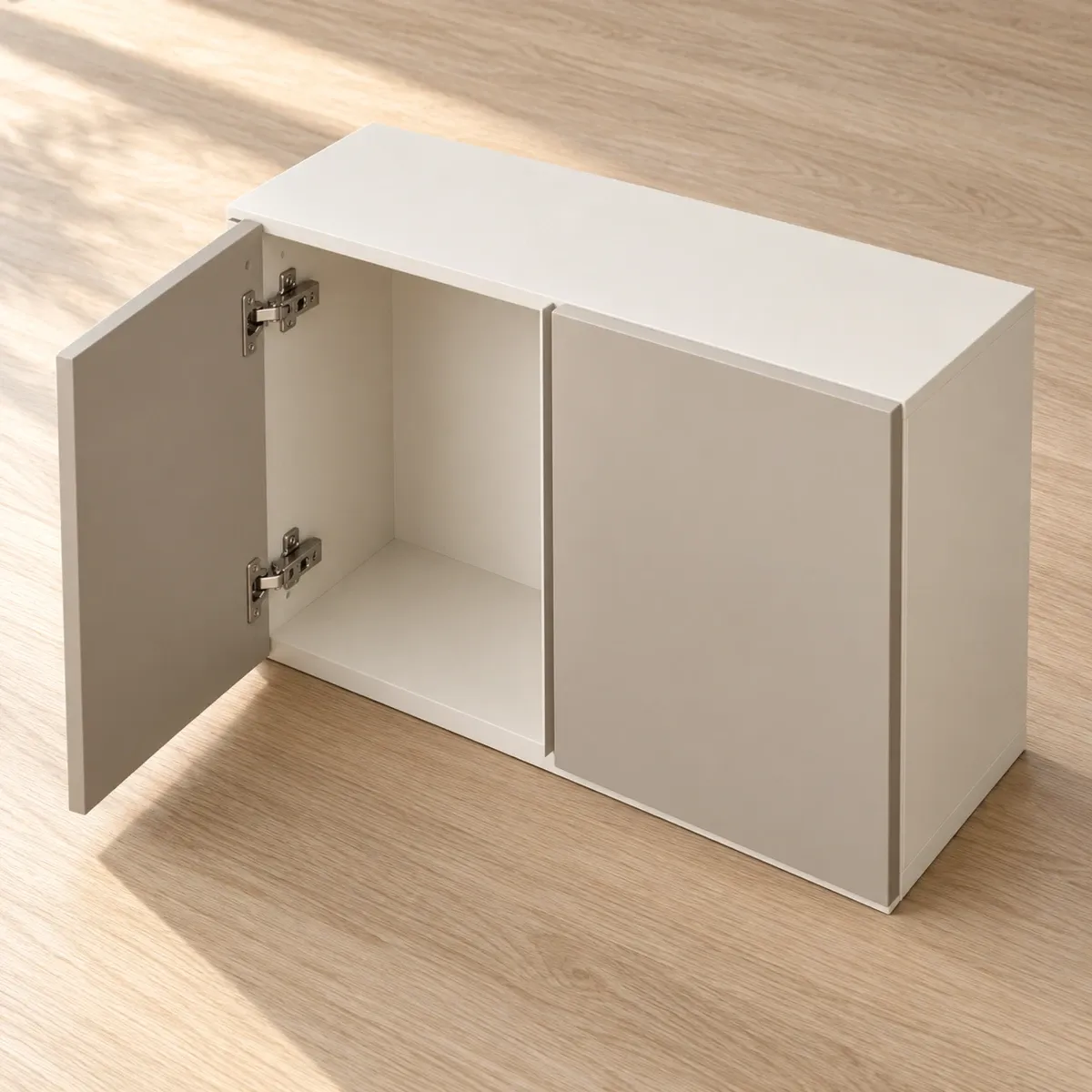 Design rendering
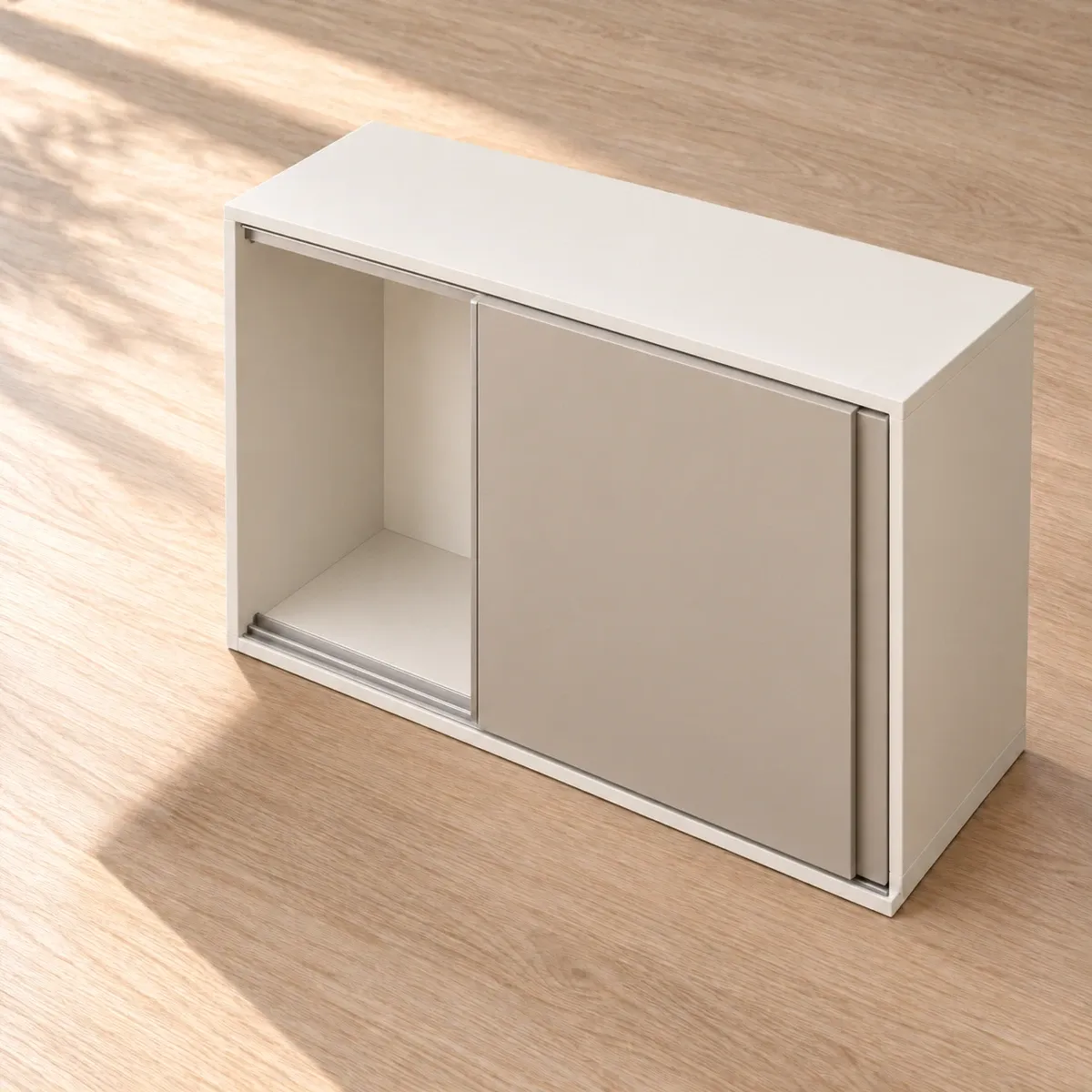 Design rendering
Where hinged and sliding differ
Space
Hinged doors need their own width of clear floor. Sliding doors need none, which can decide the layout in a small bedroom.
Inside the wardrobe
Hinged bays can take drawers, pull-outs and angled shelves anywhere. Sliding interiors must keep moving parts clear of the panel overlap.
Fitting
Hinged doors adjust on the hinge to suit uneven walls. Sliding needs a level plinth and top fixing for the track to run smoothly.
Hinged or sliding in a multi-room order
Sliding adds an aluminium track and frames from a second supplier, cut to the width of each wardrobe. On a project with many wardrobes that is one more item to label by room. Hinged wardrobes come complete from one panel factory.
Hinged or sliding: how to choose
Hinged vs Sliding Wardrobes: FAQ
Which lasts longer?
Both last when fitted level. Hinges are simple to adjust or replace. Sliding tracks need to stay clean and level.
Can I have mirror doors on a hinged wardrobe?
Yes, on one or more leaves. Sliding panels simply allow larger uninterrupted mirrors.
Which is better for sloped ceilings?
Hinged. Doors can be cut to the angle; sliding tracks need a straight, level run.