
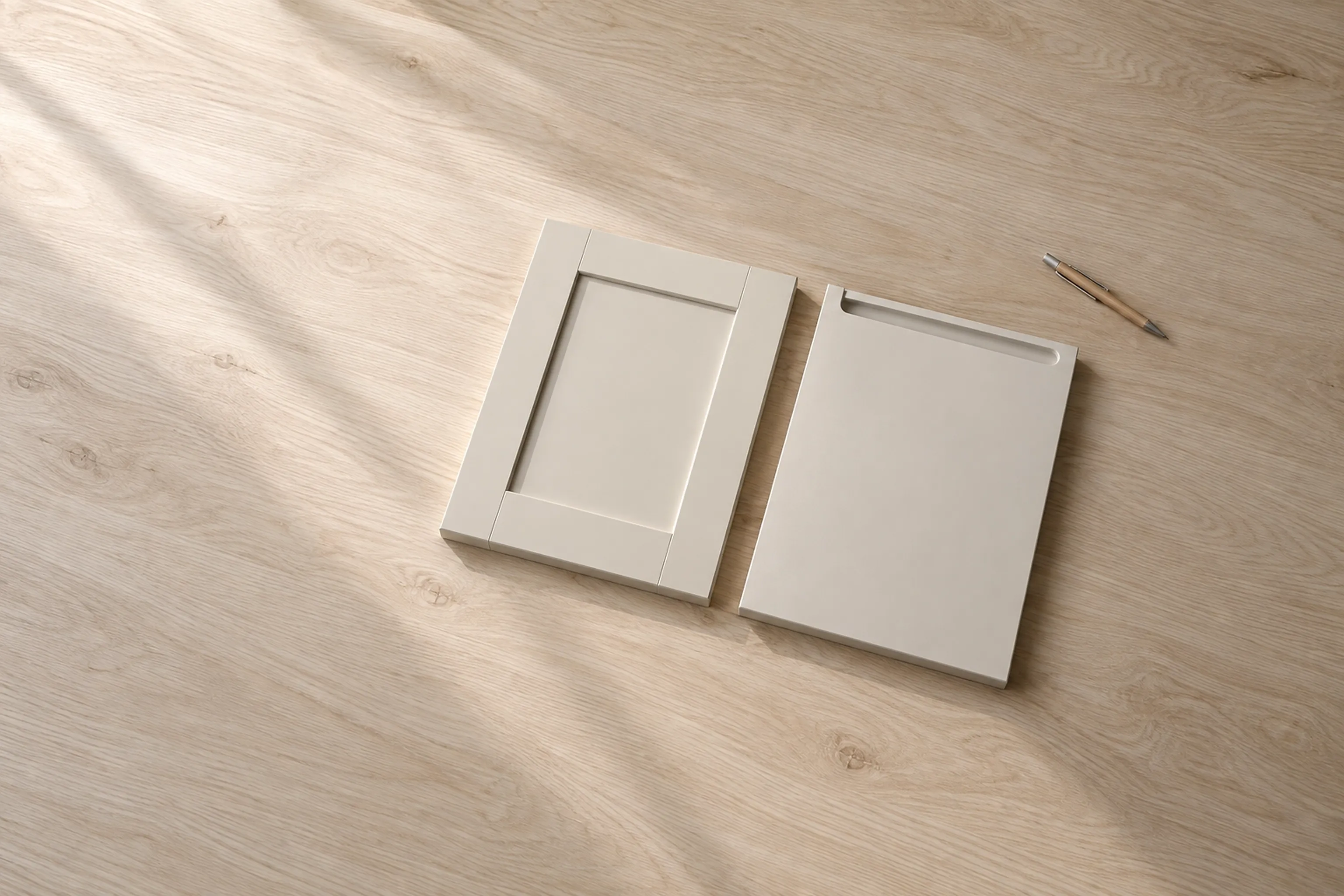
Choose Shaker for a classic or transitional kitchen in painted or timber finishes. Choose handleless for a minimal, modern look in flat slab doors. In the same finish, both cost more than a plain slab door: handleless for the gola channel, Shaker for the five-piece construction.
Shaker vs handleless: side by side
| Dimension | Shaker | Widest finish choice Handleless |
|---|---|---|
| Door | Five-piece frame | Flat slab |
| Opening | Knob, cup pull or bar handle | J-pull, gola channel, push-to-open |
| Finishes | Solid wood, lacquer, thermofoil | PET, lacquer, acrylic, melamine, veneer |
| Lowest-cost build | Thermofoil | Melamine with J-pull |
| Cleaning | Recess collects dust | Flat faces wipe fast |
| Carcass change | None | Notched for gola channel |
| Style range | Classic to modern | Modern |
| Best for | Family homes, period houses | Apartments, open-plan living |
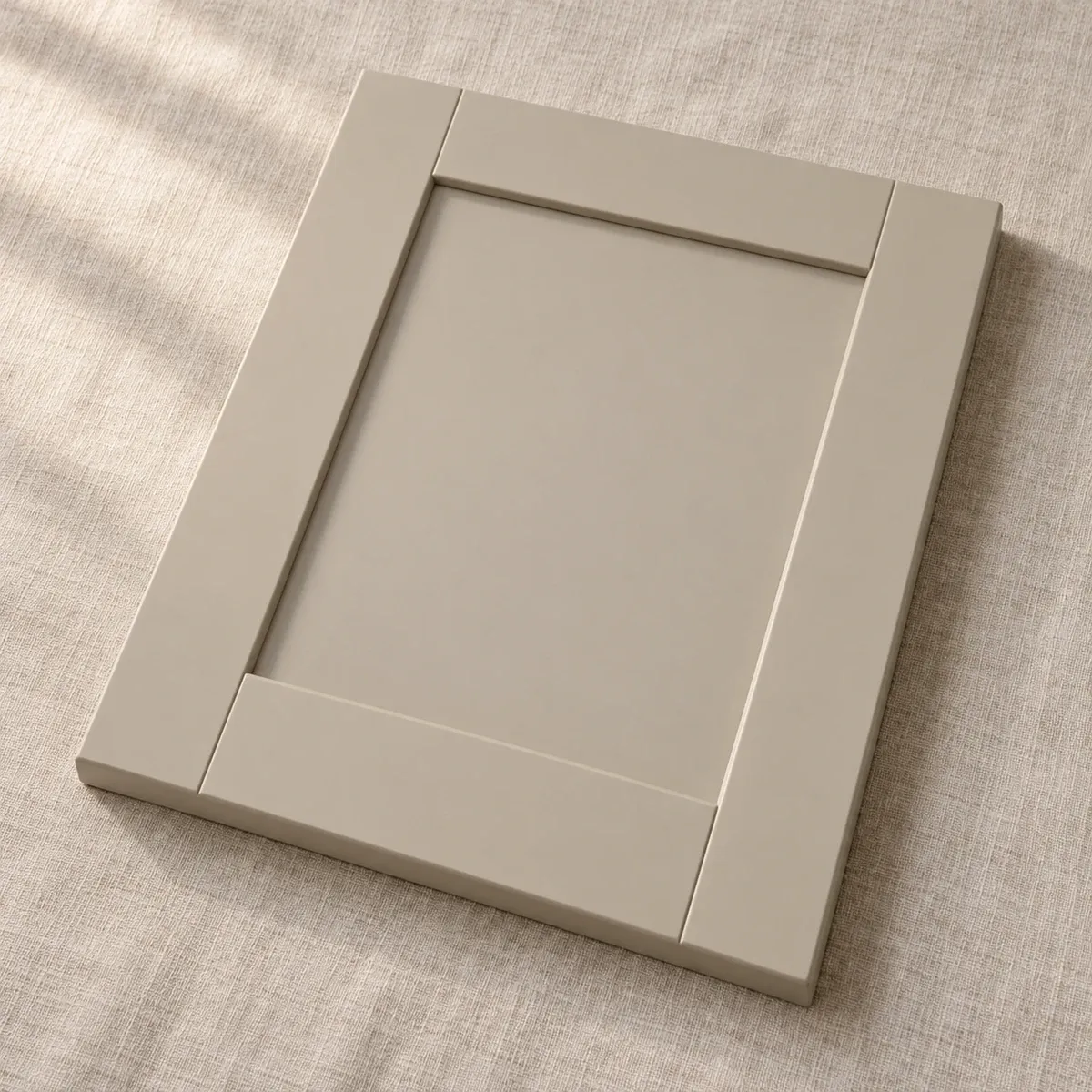 Design rendering
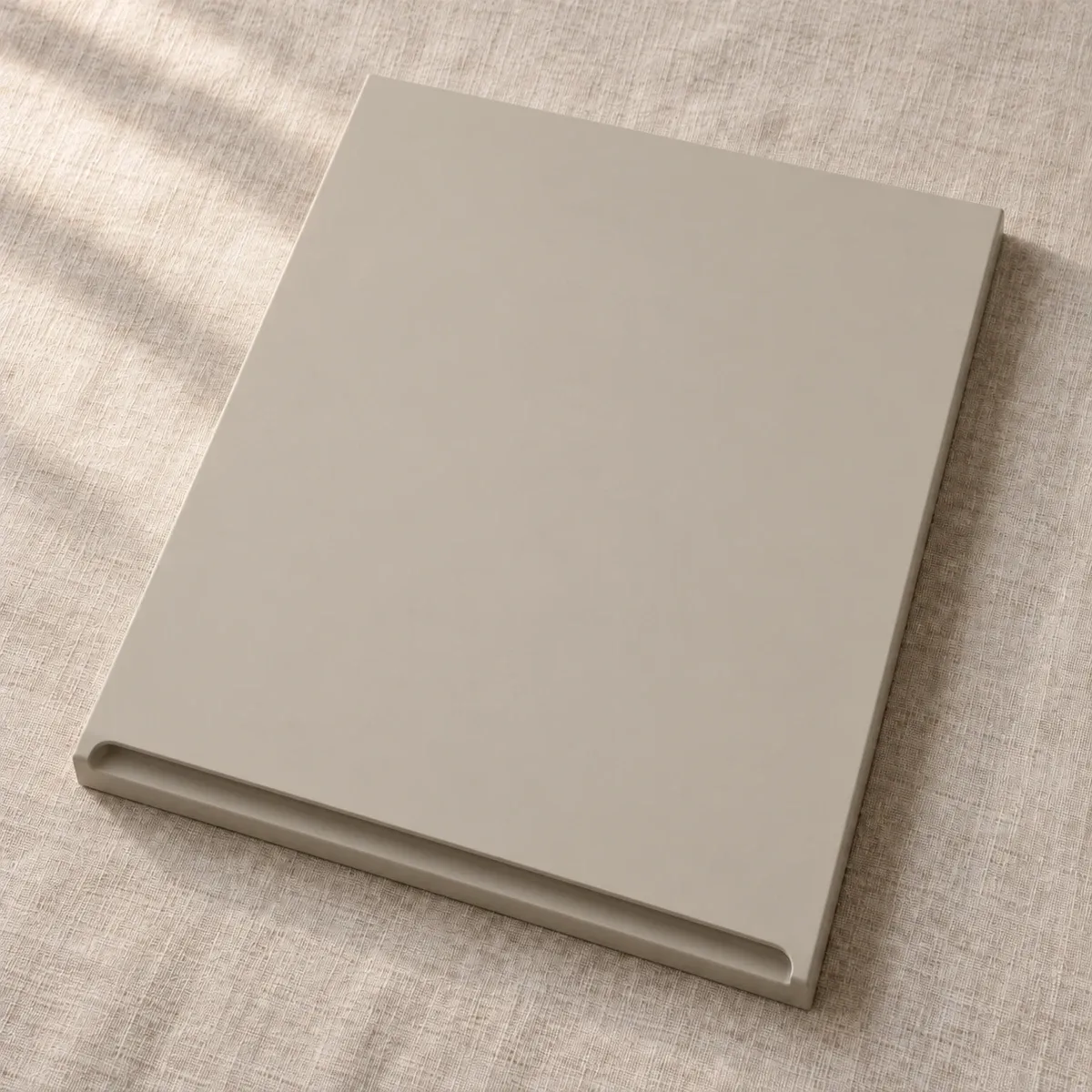 Design rendering
Where shaker and handleless differ
Cost
A Shaker door has more parts and more machining than a slab. Handleless adds an aluminium profile and carcass notching. Which is cheaper depends on the finish; ask for both priced on the same drawings.
Finish options
Handleless works in every flat finish, including the cheapest. Shaker needs a finish that can follow a frame: lacquer, thermofoil or solid wood.
Daily use
Handles are easier for children and anyone with limited grip. Handleless channels need an occasional wipe; Shaker recesses need dusting.
Resale and taste
Shaker changes character with colour and handle, so it dates slowly. Handleless reads as contemporary and suits open-plan rooms where the kitchen should recede.
Shaker or handleless in a multi-room order
Style decides which factories are involved. Shaker in lacquer or solid wood brings in a finishing or timber workshop with a longer lead time; handleless with a gola channel adds an aluminium profile supplier. Either way the fronts meet their carcasses at the consolidation warehouse, where sample units are checked before loading.
Shaker or handleless: how to choose
Shaker vs Handleless: FAQ
Can a Shaker kitchen be handleless?
Not cleanly. The frame leaves little room for a routed pull. Slim-rail Shaker with small knobs is the usual compromise.
Which style is cheaper?
In lacquer they are close. In the cheapest finishes, a flat slab wins because Shaker cannot be made in melamine or PET.
Can I mix both in one kitchen?
Yes. A frequent pairing is Shaker on the main run with flat, handleless tall units for appliances.
Do both use the same carcass?
Yes, except that gola handleless base units are notched at the top for the channel.